
Hakkında
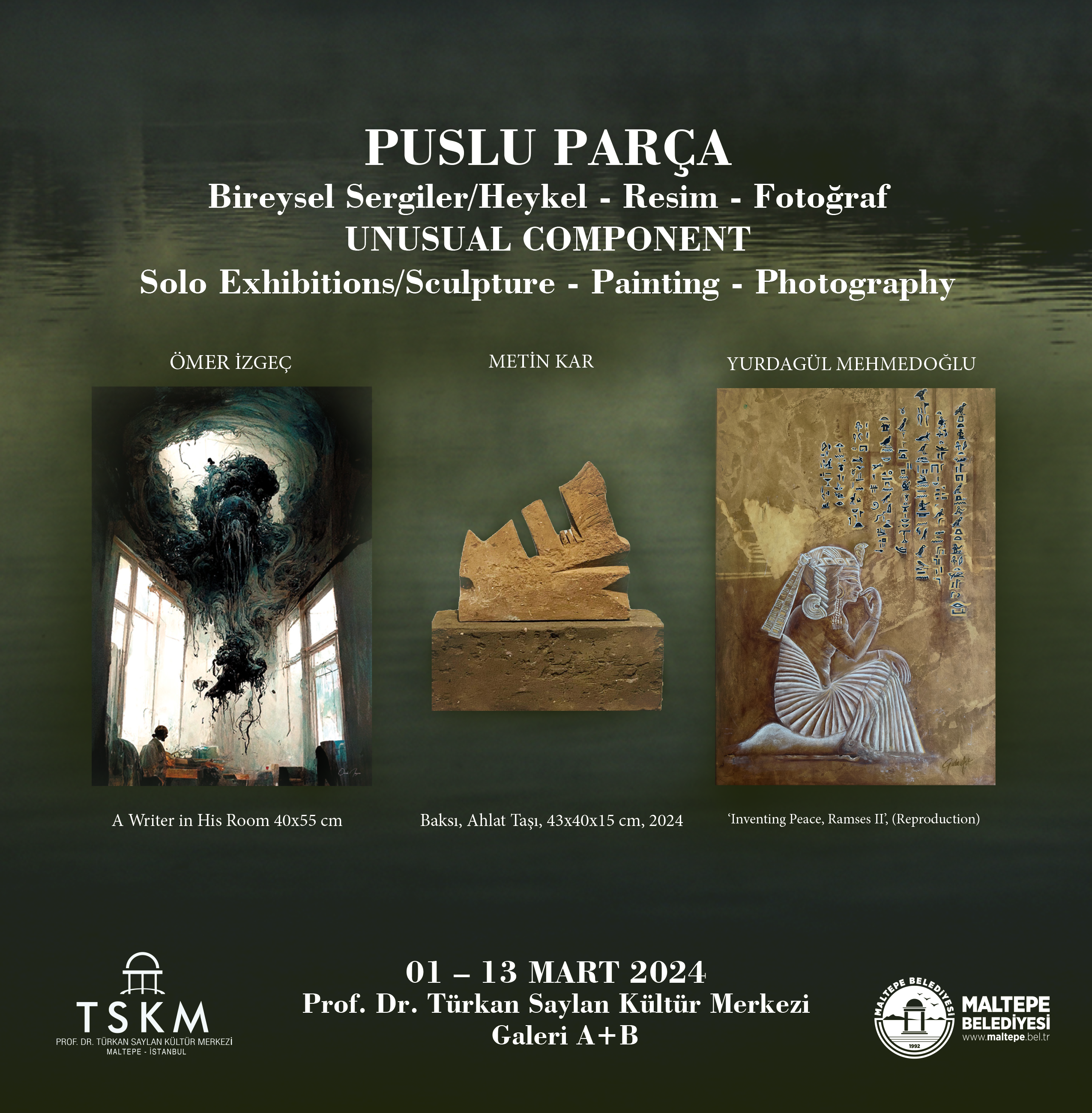
Puslu Parça, 01 – 13 Mart 2024 tarihlerinde İstanbul’da Prof. Dr. Türkan Saylan Kültür Merkezi’nde sanatseverlerle buluştu.
Felsefî Arkaplan ve Amaç
Diller, kaynakları, özellikleri ve ömürleri ne olursa olsun insanın varoluş macerasında hafıza ve düşünce işlevini gören mevcudiyetlerdir. Dil üzerinden insanın konuşabilen bir varlık olduğunu hatırlamak, onun anlatısını mümkün kılan akılcı yönün sürekli muhafaza edilmiş olduğunun altını çizmektir. Bununla beraber, konuşabildiğimizde rasyonel bir eylemi gerçekleştirmekle kalmayıp çeşitli akletme biçimlerini ve dünya tasavvurlarını var etmiş oluruz.
Bu açıdan, konuşabilmek, dilin her koşulda insanın anlam dünyasını var etme/var olma durumu olarak da anlaşılabilir. Dil, bir kez var olduktan sonra, kendinde olduğu kadar bireyin evreninde de ilk rasyonel ve tekil anlamlarından, sembolik, mecazi olanlara kadar birçok söyleme imkanına açılır. Dil, görünürdeki tekilliğinden yani ilk anlamlardan, anlamı çoğaltan bir düzleme taşındıkça farklı varoluşlara ve anlatımızı özgürleştirmeye olanak tanır. Böyle bakıldığında dil, bir nesne olmaktan çok, içinde oluşumuzu varettiğimiz, sınır-eşik durumları ile bizi çizen/tasvir eden/anlatan büyük bir açık alandır (open space). Kuşkusuz, birçok tarzla olduğu gibi sanat yoluyla konuştuğumuzda, dilin varlığını çoğaltan o açık alanı idrak edebiliriz.
Yazı dilin dünyasından onu görünür kılan bir olgu olarak karşımıza çıkar. Yazı, dünyasallığı içinde konuşabilen varlığın dil dimağını ören arkaplanlardan biri olarak, harflerin koruyuculuğunda anlamını yeniden yeniden doğurmaya devam eder. Harfler ezelî biçimde vardır ve işaret ettikleri şey hep anlamdır. Ve, anlamın peşinde olanların çok iyi bildikleri gibi, gösterge olarak yazı, işaret ettiğinden fazlasını içerimler. Göstergeler olarak yazıyı bağrında saklayan harfler, başlı başına insan-anlatısının mikro iştirakçileridirler. Bu, bazen harflerin, metinler, ibareler içindeki işlevselliğinin olduğu kadar, insanın macerasında işaret ettiği değer düzleminin de soruşturulmasını gerekli kılar.
Harften, dile varana kadar oluşan zincir, kendimizi öteki ile bildiğimiz yegâne bir hikâyeyi söylemeyi de imkân alanına taşır. Göç hareketliliklerinin son derece hayati ve varoluşsal krizler oluşturduğu tarihin içinde bulunduğumuz bu kesiti, insanın yekdiğeri ile karşılaşmalarını çözümlemesi açısından, dili ve ona bağlı olan bütün süreçleri yeniden ele almayı gerektiriyor. Tek tek harfler, heceler, lugatler, konuşmayı beceremediğimiz öteki diller ayrı ayrı fenomenlerdir ve her birimiz diğerinin dilinde, harflerinde, hecelerinde, lehçelerinde ve kelimelerinde var olmaya devam ediyoruz. Agamben’in dediği gibi ‘kelime, daha konuşmayı bilmediğimiz zamanlardan bize kalan tek şey; dil içinde karanlık bir şarkı; tam anlayamadığımız, ama kulak vermekten kendimizi alamadığımız bir lehçe, bir ağız.
Ev yanıyor bile olsa, dilleri kavrulmuş bile olsa, insanlar konuşmayı sürdürüyor’. Dillerin yolculuğuna, eklemlenen sınır-eşik durumları olarak alt isimlendirmeler, politik, etik, estetik gibi birçok alanda yüzleşmenin mihenk taşlarını oluşturuyor ve insanın büyük anlatısı her şeye rağmen devam ediyor. Tek başına kurtuluş diye bir şeyin olmadığı varoluşun dünyasında dil, hala bize, yekdiğerimizde kök saldığımızı gösteren hayati anlamını dayatıyor.
Bu bakış açısıyla serginin felsefî yaklaşımında, dil, söyleyen bir nesne olmaktan ziyade kendisine işaret edilen anlatı açıklıklığıdır. Sergi, dili taşıyan estetik bir açıklık olarak yazıdan görsel söyleme desteği alarak, harfleri ve onlarla oluşan olguları, insanın anlatısının hem özgün parçası hem de bütüne açılan evrensel metinleri olarak konumlandırmayı hedefliyor.
Üslup
Sergideki sanatçılar, harflerin, metinlerin ve dillerin, modern dünyanın göçlerine karışmış bir akış olduğuna dair bir imada bulunuyorlar. Her bir dilin ve harfin özgül-tikel manalarını, genel olanın aleyhine bozan alışılmadık bağdaşıklıklarla söylemeyi tercih ederek postmodern zamanların çoğul/yeni ve bazen tuhaf olan söyleme biçimlerini işaret ediyorlar. Sergide, harflerin, bir metin oluşturduğundaki anlamları geride tutularak kendi başlarına yolculuklarını devam ettiren birer gösterge/ gösterenler olarak açığa çıktıkları görülüyor. Harfler, farklı biçim dilleriyle buluşup, modern dünyanın konuşanı oluyorlar. Metinler ise kitabî alan dışında bir yerlerde, bizzat tabiatın tanıklığı ve korumasındaki alanlarda da, hem apaçık hem de gizil görünümleriyle, aslında sürekli göçte olan insanın büyük anlatısını pekiştiriyorlar.
Burada, ‘sadece yalnız olmadığım için kurtuluş vardır; Kendimi ancak başkaları içinde bir öteki olarak kurtarabilirim. Yalnız olduğumda kurtuluşa ihtiyacım yoktur, yalnızlığa has hakikat budur: tanım itibariyle kurtarılabilir değilimdir. Kurtuluş, yalnız olmadığım için, çoğulluk ve çokluk olduğu için mümkündür’ diyen Agamben söylemiyle uyumlu, dilin görünümlerini çoklu ve alışılmış olmayan buluşmalarla aşmaya çabalayan çalışmalar sunuluyor.
Şimdi ile sonsuzluk arasında asılı kesitsel bir zamanı, dilin sonsuz detaylarının çoğulluğuna iliştirmek suretiyle bütüncül zaman ya da kairos ile temasın imkânı deneniyor. Bu, kuşkusuz, şimdinin, bütünlük içindeki sonsuz çoğul detayları kapsadığına inanan bir görme biçimidir.
About
“Unusual Component” met with art enthusiasts at the Prof. Dr. Türkan Saylan Cultural Center in Istanbul from March 1 to March 13, 2024.
Philosophical Background and Purpose
Languages, regardless of their sources, characteristics, and lifespans, are entities that serve the functions of memory and thought in the existential journey of humanity. To recognize that through language, humans are beings capable of speech is to underscore the constant preservation of their rational aspect, which enables their narrative. Moreover, when we can speak, we not only perform a rational action but also create various forms of reasoning and worldviews.
From this perspective, the ability to speak can also be understood as the situation of creating/existing the world of meaning for humans in every circumstance. Once language comes into existence, it opens up many discourses, ranging from its initial rational and singular meanings to symbolic and metaphorical ones, both within itself and in the individual’s universe. As language moves from its apparent singularity, i.e., initial meanings, to a plane that multiplies meaning, it enables different existences and liberates our expressions. In this sense, language, rather than being an object, is a vast open space in which we bring about our formation, delineating/describing/telling us through boundary-threshold situations. Undoubtedly, when we speak through art, among many other styles, we can grasp that open space that multiplies the existence of language.
Writing emerges from the world of written language as a phenomenon that makes it visible. Within its worldly nature, writing continues to recreate its meaning under the guardianship of letters, as one of the backgrounds that weave the language and mind of the speaking being. Letters have existed eternally, and what they signify is always meaning. And, as those who pursue meaning know very well, writing as a sign contains more than what it indicates. The letters that hold writing as signs are, in themselves, micro-participants in the human narrative. This sometimes necessitates investigating not only the functionality of letters in texts and phrases but also the plane of values that human adventure signifies.
The chain that forms from letter to language brings to the realm of possibility the telling of a unique story that we know ourselves through others. In this section of history, marked by migration movements that create vital and existential crises, it necessitates reevaluating language and all related processes in terms of analyzing human encounters with one another. Individual letters, syllables, and vocabularies, as well as languages we fail to speak, are distinct phenomena, and each of us continues to exist in the language, letters, syllables, dialects, and words of the other. As Agamben says, ‘the word is the only thing left to us from times when we did not yet know how to speak; a dark song within language; a dialect, an accent that we do not fully understand, but cannot stop listening to.
Even if the house is burning, even if their tongues are scorched, people continue to speak. The journey of languages, subtitled as boundary-threshold situations, forms the cornerstones of confrontation in many fields such as politics, ethics, and aesthetics, and the great narrative of humanity continues despite everything. In the world of existence, where there is no such thing as salvation alone, language still imposes on us its vital meaning that shows we are rooted in each other.
From this perspective, in the philosophical approach of the exhibition, language is more than a speaking object; it is the narrative clarity to which it points. The exhibition aims to use the aesthetic openness that carries language, supported by the transition from written to visual discourse, to position letters and the phenomena formed with them as both unique parts of the human narrative and universal texts that open up to the whole.
Dialect
Artists in the exhibition suggest that letters, texts, and languages are part of a flow mixed with the migrations of the modern world. By opting to speak through unusual alliances that disrupt the specific and individual meanings of each language and letter against the general, they point to the plural/new and sometimes strange forms of discourse of postmodern times. In the exhibition, it is observed that letters emerge as indicators/signifiers that continue their journeys on their own, holding back the meanings they create in a text. Letters meet different formal languages and become the speakers of the modern world. Texts, situated outside the bookish realm and protected by nature’s witness, reinforce the great narrative of the perpetually migrating human both openly and covertly.
Here, works are presented that strive to surpass the appearances of language with multiple and unconventional encounters, in harmony with Agamben’s statement, “There is salvation only because I am not alone; I can only save myself as an other among others. I do not need salvation when I am alone; the truth unique to loneliness is that, by definition, I am not savable. Salvation is possible because I am not alone, because of plurality and multitude.”
An attempt is made to connect a suspended sectional time between now and eternity to the plurality of infinite details of language, testing the possibility of contact with holistic time or kairos. This undoubtedly represents a way of seeing that believes the present encompasses infinite plural details within a whole.
 omerizgec.net