
Suspended Narratives
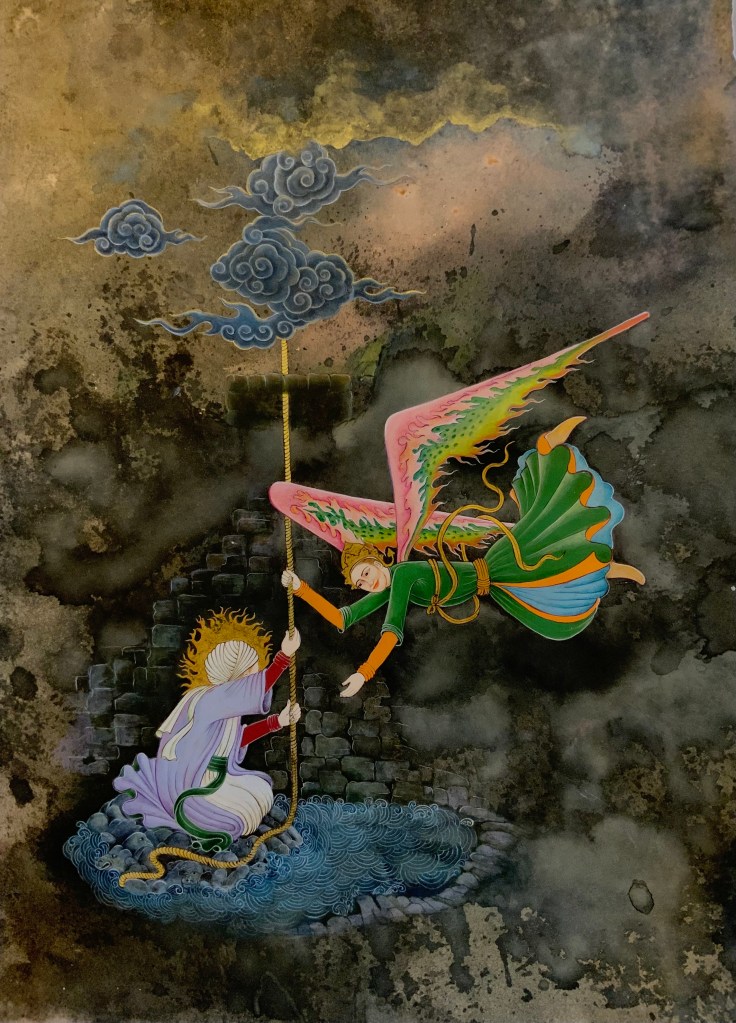
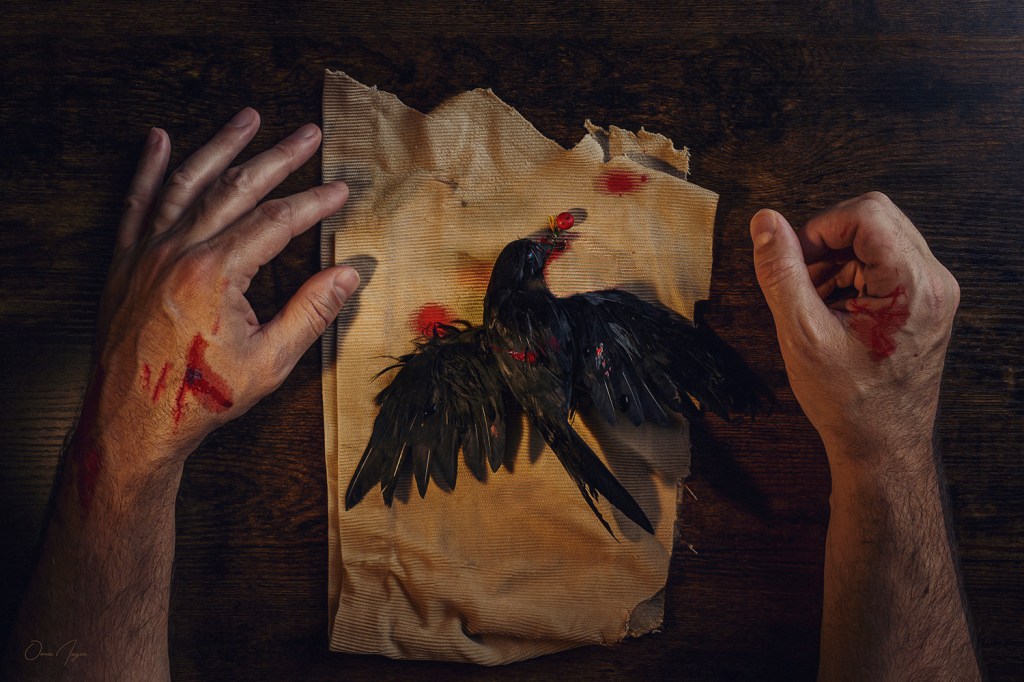
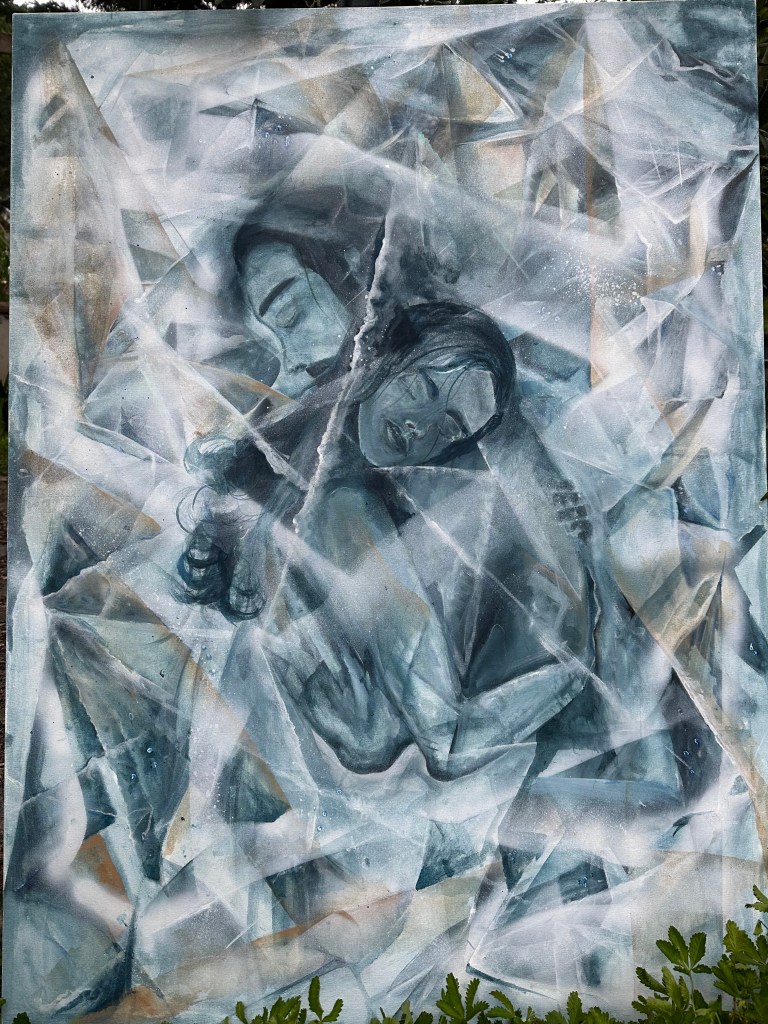
In the grand image of the cosmos, the narrative of every being is caught on the suspension of being in the world, on the inevitable great handle of time and place. As part of this setup, humanity’s obligation is to fill in its own story with its entire existence. As in Levinas’s mental design, there may be freedom before the past and the future, yet the self is chained to itself, crammed full. The event titled Suspended Narratives was opened with implications that include both this existential entanglement and a potential unraveling. Similarly, both W. Benjamin, who spoke of “images of things that happened or existed in the past, disappearing in a flash,” and S. Konevi, who claimed that “truth is seen only as a fleeting flash,” speak of a simultaneous enlightenment and blindness. Suspended Narratives opens onto the traces of light and shadow that point to a strange reality caught between oscillation and tension.
As a theme for these solo exhibitions, imagining the state of being suspended and producing art from it is, as in the artists’ other works, based entirely on personal pressure. With a subjective but precise drive, they attempted to express in their own styles that images are entities caught between two places, two states—splitting and suspending time anew. Moreover, emerging from symbolic systems of meaning, the moment they come into being can also be described as a new form of suspension, revealing a narrative that is again stretched back into time. Regardless of the medium or method used to speak of the moment between pause and flow, Suspended Narratives draws our attention not only to a transition between planes but to an open space woven from transformation, hesitation, and ambiguity.
The space in which suspended stories appear is not a temporary or secondary element; it is a distinct place of pause and drift. This field, where the uncertain lingers, pulls a haunting twilight into the realm of potential, allowing the light of an effective state of existence to reflect. It gestures toward time, but does not yield history. It is voluminous, yet immeasurable. It carries within it the promise of the unseen and the possibility of the not-yet. These spaces are the silent resistance of potential; the conscious expression of weakness. Here, the decision not to act is just as meaningful as the ability to act. Stories that will never reach the present can only be admitted by someone at the point where they strike the boundary of the world—and once received, they become suspended anew and sent into a new universe of appearances. And only there, as long as they are observed, the world through which the stories flow is also touched by the fissure, establishing a new covenant between beings. The folds of distance between us and the figures are sliced apart; a tremor unsettling to our gaze emerges.
Here too, the existential states within the suspended story are drawn into the present through the artist’s imagination, turned toward us, and upon our seeing them, they adhere to history. At the same time, while realizing a praxis, they position themselves as historical narrative beings behind us, placing the viewer ahead. Through their actions, the figures, as they approach us, also shed their connection to the story in which they had once been suspended.
The images—the players of Suspended Narratives—are beings that drift between “might be” and “might not be,” floating between spatialities, tearing through the “here and now,” sustaining a continuous incompleteness. The protagonists of the works are portrayed with bodies that cannot go beyond their own existence and that mediate nothing. These strange beings transform into forms that alter life experience by displaying their own plural temporalities.
With a convex curve, the story breaks away from the devices to which it was fastened in the timelines of history, swelling into a space and time that will never become a future, shaped by the shame and anxiety of its subjects. The wavering bodies in suspension transform into warriors of light, inviting themselves to be read within a new suspended narrative. On this second layer, beings are no longer partial or deficient, or dramatically dull with sorrow, but rather forms of artistic reality with no narrative other than themselves—light motifs, pillars of flame, whirlwinds of cloud.
As the manifestation zones or volumes of these suspended stories narrow, the vortices of meaning deepen. With a never-ending inward pull and a misty outward thrust, the law of suspension is absorbed by this surface. There, the figures—neither lacking nor excessive—are etched into a crevice, buried in their own light that history cannot haunt, in a hardened wakefulness between being seized by the flow and resting in stillness. They are seen not through the metric standards of our vision, but under a gaze disproportionate to life. As those revealed at the very point where they killed the stories in which they were suspended, they are freed from the desire for absoluteness or eternity, and from the anxiety of delaying decay—folded into themselves. In the darkness of the moment lived, as Bloch describes it, at that blind point to which it clings, they have escaped the helplessness of overlapping with themselves in the twilight of awakening. Stretched and elevated on the cross of history in a double tension belonging to their attached spaces, they have awakened to themselves in a void of meaning.
Hürriyet Gençbay
Born in 1973 in Strasbourg, France, the artist completed her primary and secondary education in Ankara, Turkey. In 2013, she began her formal training at Mimar Sinan Fine Arts University, where she studied in the Department of Traditional Turkish Arts, specializing in Illumination (Tezhip). She graduated with honors in 2018 and went on to complete her master’s degree at the same institution that same year.
Since 2023, she has been pursuing a Proficiency in Art degree at Mimar Sinan Fine Arts University. Throughout her academic journey, she has participated in numerous exhibitions and art fairs, receiving multiple awards for her work.
She currently continues her artistic and academic practice as a Lecturer in the Department of Traditional Turkish Arts, Illumination and Miniature Program, at the Faculty of Fine Arts, Sinop University.
Yurdagül Konuk
Born in Fatih/Istanbul. Studied Theology, Psychology and Art. In 2008, she became a Professor in the field of Philosophy and Religious Sciences. Currently , she is expanding the field of theological aesthetics. In addition to her academic life, Konuk, who also works on painting and literature in her own studio as Gulaart . She worked as a faculty member at Marmara University between 1991-2016. Between 2003-2006, she served as the Vice Dean of the Faculty of Theology at Marmara Unşversity Between 2016-2020, she served as a faculty member at the Faculty of Humanities and Social Sciences, Education and Theology at the Social Sciences University of Cyprus. In 2021, she worked as a faculty member at the Department of Guidance and Psychological Counseling at the Faculty of Education at Istanbul Aydın University and as a faculty member at Istanbul Aydın University. He worked as the Director General of Application and Research Centers.
Konuk received Basic Art Education and Illumination training at the Istanbul Classical Arts Foundation. He received Miniature Training at Reza Hemmatirad’s workshop and Geometric Pattern Design Training at Mirek Majewski’s workshops at the Istanbul Design Center.
She writes essays in Turkish Literature, Turkish Language, Edebiyat Kurgan, Karabatak and Critical Culture magazines. Konuk’s two novels, Sen de Rivayet Etsen and Sürüklenmek, have been published. Between 2003-2006, he presented the TV program called ‘Düşünce İklimi’ on TRT 2, moderated by Prof. Dr. Kenan Gürsoy.
Between 2018-2019, he contributed to the radio program ‘Sabahın Hayrı’, moderated by Prof. Dr. Yalçın Çetinkaya. In 2021-2022, he conducted the investment, copywriting and moderation of the program called ‘Mecaz’ on TRT 2. Her works have been exhibited solo exhibitions in Turkiye, Austria , Germany, Azarbeijan and United States.
Konuk speaks English, Arabic and Ottoman.
Ömer İzgeç
Born in Ankara in 1980, he pursued a degree in engineering before relocating to the United States in 2005 to begin his doctoral studies. He is the author of two novels, a short story collection, and two picture books for children. His literary work—spanning fiction, critical essays, and reviews—has been featured in a range of respected magazines and newspapers. He currently continues his photography and digital art practice from his own studio, where the storytelling impulse remains central. Whether through words or images, his work continues to explore the layered, suspended nature of narrative.
His art works have been exhibited in Istanbul, New York, and London.
 omerizgec.net